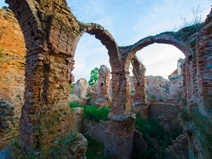
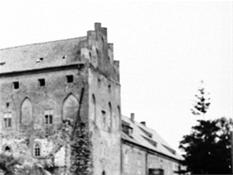
Balgos pilis yra Varmėje (Prūsija, dab. Kaliningrado sr.), Aismarių rytinės pakrantės stačiame kyšulyje. Ji pastatyta toje pat vietoje, kur anksčiau stovėjo medinė prūsų pilis (vok. Honeda). 1239 m. Kryžiuočių ordino kariuomenė ją užėmė ir jos vietoje pastatydino mūrinę pilį, o šalia, rytinėje pusėje – didelį papilį.
Naujas monumentalus statinys buvo šešiakampio formos ir turėjo tris oficinas. Pietvakarinėje dalyje buvo pilies koplyčia, o pietinėje – didžiulė vienuolyno valgykla. Oficinoje iš Vyslos marių pusės – miegamieji kambariai. Visi trys pastatai sujungti dengtais perėjimais, įrengti gilūs rūsiai ir slaptos perėjos. Pagrindiniai vartai buvo šiaurės rytų pusėje. Į rytus nuo tvirtovės stūksojo priešpilio pastatas su daugybe aukštų bokštų. Vidurinėje priešpilio dalyje buvo įrengti sandėliai, pietinėje ir šiaurinėje – kryžiuočių valdininkų butai.
XVI a. tvirtovė pradėjo nykti. 1701 m. Prūsijos karalius Frydrichas I įsakė panaudoti Balgos akmenis Piliavos (dabar Baltijskas) tvirtovei statyti. Į Marienburgą buvo išvežta didžiuma pamatų elementų kartu su pastate buvusiu inventoriumi ir papuošimais. XIX a. pabaigoje nesaugomi griuvėsiai užaugo krūmais ir medžiais. XX a. pr. priešpilio bokštas uždengtas stogu, o nuo 1928 m. įrengtas kraštotyros muziejus. Šiuo metu priešpilis yra kritinės būklės, o pilies koplyčia visiškai sugriauta.
****
Balga Castle is located in Warmia (Prussia, now Kaliningrad Oblast), on a steep hill of the eastern shore of the Vistula Lagoon, the former site of an Old Prussian wooden fortress (German: Honeda). It was conquered in 1239 by the forces of the Teutonic Knights who erected a brick castle replacing the Prussian stronghold and a large outer ward stretching to the east of the castle.
The new monumental edifice was hexagonal-shaped, with three wings. The south-west wing contained a castle chapel. The south wing had a large refectory. The wing facing the Vistula Lagoon comprised bedrooms. The three buildings were joined by roofed walkways, had deep cellars and secret passages. The main gate was in the north-eastern part of the castle. East of the fortress, an outbuilding with a number of high towers was built in the outer ward. The central part of the outer ward accommodated warehouses. The south and north sections were turned into the living quarters for Teutonic clerks.
The decay of the castle started in the 16th century. In 1701, Frederic I, King of Prussia, ordered to use the stones from Balga Castle for the construction of a new hillfort in Pillau (now Baltiysk). A number of elements of its foundations, along with the inventory and decorations, were brought to Malbork. At the end of the 19th century, the unprotected ruins were overgrown with bushes and trees. In the early 20th century, the tower in the outer ward was roofed, and a museum of regional studies was established in 1928. Today, the outer ward is in a critical state and the castle chapel is completely ruined.
Parengė Vaida Almonaitytė-Navickienė
Literatūra:
1. Visuotinė lietuvių enciklopedija. Vilnius: Mokslo ir enciklopedijų leidybos institutas, 2002, t. 2.
2. Balgos pilis - Veselojė (Bagrationovsko rajonas) [interaktyvus]. [Žiūrėta 2011 m. birželio 29 d.]. Prieiga per internetą: < http://rugrad.eu/tourism/sights/castles/338201/>
![<p> </p>
<p style="text-align: justify;">Balgos pilis yra Varmėje (Prūsija, dab. Kaliningrado sr.), Aismarių rytinės pakrantės stačiame kyšulyje. Ji pastatyta toje pat vietoje, kur anksčiau stovėjo medinė prūsų pilis (vok. Honeda). 1239 m. Kryžiuočių ordino kariuomenė ją užėmė ir jos vietoje pastatydino mūrinę pilį, o šalia, rytinėje pusėje – didelį papilį.</p>
<p style="text-align: justify;">Naujas monumentalus statinys buvo šešiakampio formos ir turėjo tris oficinas. Pietvakarinėje dalyje buvo pilies koplyčia, o pietinėje – didžiulė vienuolyno valgykla. Oficinoje iš Vyslos marių pusės – miegamieji kambariai. Visi trys pastatai sujungti dengtais perėjimais, įrengti gilūs rūsiai ir slaptos perėjos. Pagrindiniai vartai buvo šiaurės rytų pusėje. Į rytus nuo tvirtovės stūksojo priešpilio pastatas su daugybe aukštų bokštų. Vidurinėje priešpilio dalyje buvo įrengti sandėliai, pietinėje ir šiaurinėje – kryžiuočių valdininkų butai.</p>
<p style="text-align: justify;">XVI a. tvirtovė pradėjo nykti. 1701 m. Prūsijos karalius Frydrichas I įsakė panaudoti Balgos akmenis Piliavos (dabar Baltijskas) tvirtovei statyti. Į Marienburgą buvo išvežta didžiuma pamatų elementų kartu su pastate buvusiu inventoriumi ir papuošimais. XIX a. pabaigoje nesaugomi griuvėsiai užaugo krūmais ir medžiais. XX a. pr. priešpilio bokštas uždengtas stogu, o nuo 1928 m. įrengtas kraštotyros muziejus. Šiuo metu priešpilis yra kritinės būklės, o pilies koplyčia visiškai sugriauta.</p>
<p style="text-align: center;" align="center">****</p>
<p style="margin: 0cm 0cm 0.0001pt; text-align: justify;"><span lang="EN-GB">Balga Castle is located in Warmia (Prussia, now Kaliningrad Oblast), on a steep hill of the eastern shore of the Vistula Lagoon, the former site of an Old Prussian wooden fortress (German: <em>Honeda</em>). It was conquered in 1239 by the forces of the Teutonic Knights who erected a brick castle replacing the Prussian stronghold and a large outer ward stretching to the east of the castle. </span></p>
<p style="margin: 0cm 0cm 0.0001pt; text-align: justify;"><span lang="EN-GB"> </span></p>
<p style="margin: 0cm 0cm 0.0001pt; text-align: justify;"><span lang="EN-GB">The new monumental edifice was hexagonal-shaped, with three wings. The south-west wing contained a castle chapel. The south wing had a large refectory. The wing facing the Vistula Lagoon comprised bedrooms. The three buildings were joined by roofed walkways, had deep cellars and secret passages. The main gate was in the north-eastern part of the castle. East of the fortress, an outbuilding with a number of high towers was built in the outer ward. The central part of the outer ward accommodated warehouses. The south and north sections were turned into the living quarters for Teutonic clerks. </span></p>
<p style="margin: 0cm 0cm 0.0001pt; text-align: justify;"><span lang="EN-GB"> </span></p>
<p style="margin: 0cm 0cm 0.0001pt; text-align: justify;"><span lang="EN-GB">The decay of the castle started in the 16<sup>th</sup> century. In 1701, Frederic I, King of Prussia, ordered to use the stones from Balga Castle for the construction of a new hillfort in Pillau (now Baltiysk). A number of elements of its foundations, along with the inventory and decorations, were brought to Malbork. At the end of the 19<sup>th</sup> century, the unprotected ruins were overgrown with bushes and trees. In the early 20<sup>th</sup> century, the tower in the outer ward was roofed, and a museum of regional studies was established in 1928. Today, the outer ward is in a critical state and the castle chapel is completely ruined. </span></p>
<p> </p>
<p><em>Parengė Vaida Almonaitytė-Navickienė</em></p>
<p>Literatūra:</p>
<p>1. <em>Visuotinė lietuvių enciklopedija. </em>Vilnius: Mokslo ir enciklopedijų leidybos institutas, 2002, t. 2.</p>
<p>2. <em>Balgos pilis - Veselojė (Bagrationovsko rajonas)</em> [interaktyvus]. [Žiūrėta 2011 m. birželio 29 d.]. Prieiga per internetą: <span><</span> <span><a href="http://rugrad.eu/tourism/sights/castles/338201/">http://rugrad.eu/tourism/sights/castles/338201/</a>> </span></p>
<p class="MsoNormal"> </p>](https://autcserver.baco.lt/api/images/heritage/0DB1F9D4-389B-4470-BE19-D25453633AEA)